It Went Well, Didn’t It?
What the other side may decide after you leave the room
You can lose a valuable business opportunity even when your proposal is excellent, your strategy is sound and your team is thoroughly prepared. The deciding factor may be how the people across the table experience you and your team. And you may never know why.
The meeting after the meeting
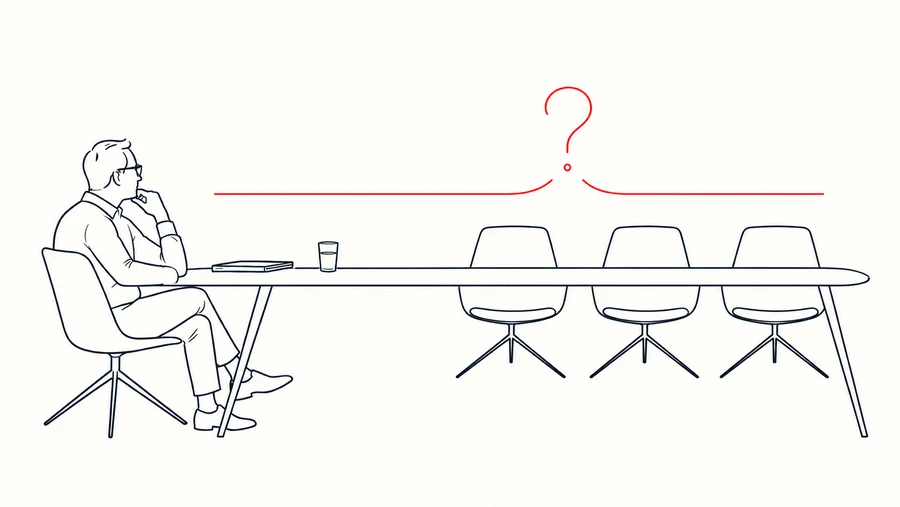
After any important meeting there are two debriefs.
The first is yours. It happens in the lift and it’s nearly always the same: ‘That went well. We answered everything. They seemed interested.’
The second is theirs, once you’ve gone. ‘Do you believe them?’ ‘Could that team actually deliver?’ ‘Would you back them?’
You don’t get to hear the second one, and it’s the one that decides what happens next.
By then they’re weighing up how they experienced the meeting as much as your proposition. If every hard question was answered by the CEO, the buyer has noticed that the business leans on one person. If two partners described the plan slightly differently, the client is wondering which of them to believe.
I call this the Human Discount. Nothing about your proposition changed in that hour. Their confidence in the people on the other side of the table did, and it can turn up later as tougher terms, more due diligence, or a bidder who goes quiet.
You probably won’t be told, either.
You may be told you lost on price or their requirements have changed, and you no longer align with their needs. But was this the real reason?
Why careful preparation can still fall short
I’m not against rehearsal. Check the facts, fix the slides, practise the awkward questions. It all helps. But practising what you plan to say does not, on its own, show you how someone else will interpret it.
The trouble with the people who help you prepare, colleagues and advisers alike, is that they know too much. They know what you meant when you didn’t quite say it. They’ve heard the story so often that they no longer notice the gap in it. Some of them also work for you, which doesn’t encourage candour.
And if you’re going in as a team, the other side is watching the team: who answers, who interrupts, who looks at whom before speaking.
Hear the doubts while you can still address them
What you need is somebody who doesn’t know your story to sit where the buyer will sit, and tell you afterwards what they made of you.
That’s what I do, and I call it Human Counterpart. We take the meeting you actually have coming up, with the people who’ll be in it. I play the other side: your prospective client, your investor, the buyer of your company. We have the conversation. Then I tell you where I believed you and where you lost me, and what that means. We then do it again.
What I heard from the buyer’s chair
A management team was getting ready to meet prospective buyers. They knew that business inside out.
I simply asked, ‘Where is the future value in your company?’
What came back was a very good account of the business as it stood. Several people answered at once. One was trying hard to sound assertive. Another’s natural style took over the room.
Technically, our products are market-leading. Take a look at this analyst’s report.
That fell flat. Sitting there as the buyer, I couldn’t hear where the business was going or how they’d get it there, and they didn’t feel joined-up.
As the potential buyer, I hadn’t heard enough to feel confident about how the team would grow the business.
I told them. I also told them they didn’t seem like themselves, which mattered more.
We joined up the past, the present and the future of the business, and left the obstacles in rather than pretend it would all be rosy. Then we ran it again. The second time wasn’t slicker. It sounded like them, talking to a buyer as equals about their business, whereas the first time they’d been presenting to me.
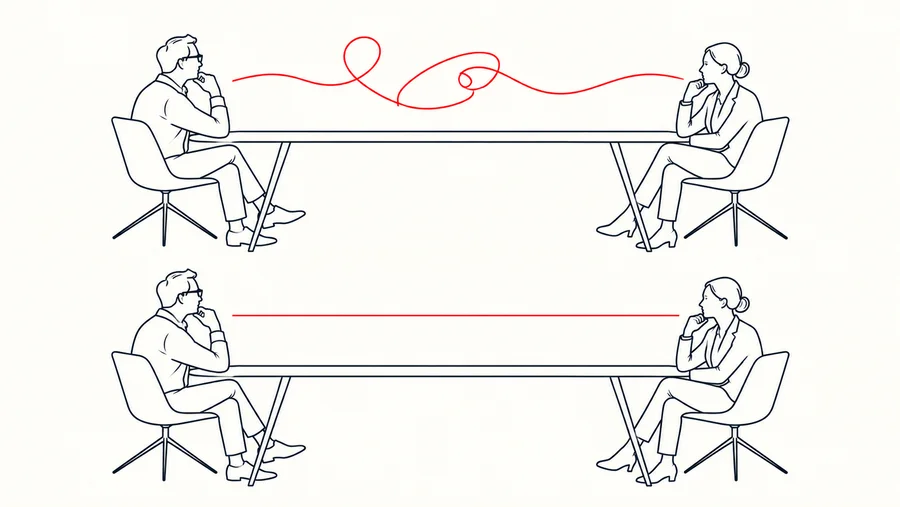
I once asked the managing partner of a global professional-services firm how his practice justified its premium fees. He answered confidently, but his foot was shaking under the table. I found myself wondering whether he believed what he was telling me. I could have been wrong. I told him what I’d noticed and what it had made me doubt.
At a global technology consulting firm, I worked with a senior leader and his team the day before a major negotiation. He later credited our work with helping them win a multimillion-dollar assignment. That was his assessment of its contribution.
'Our work together… increased confidence and our ability to secure this important deal.' Regional GM
What sessions like that give you is simple enough. You find out which question you haven't really answered. You see what an outsider makes of your team. And you find out while you can still do something about it.
Sometimes, what emerges from a live simulation goes beyond how people perform. The underlying narrative may need strengthening, the argument restructuring, the positioning rethinking, or the team may not be entirely aligned. When necessary, we work with clients earlier and go deeper, helping them develop and sharpen these elements before putting them to the test again.
What if experienced people feel exposed?
They sometimes do. Senior people aren't used to hearing that an answer didn't land, least of all in front of colleagues.
So we agree the rules before we start: what the session is for, who takes part and who hears the feedback. It runs under the Chatham House Rule and is covered by a non-disclosure agreement. I stick to what I saw and experienced. 'You gave two different accounts of the plan' is useful. 'You come across as evasive' isn't, and I don't say it. People can disagree with me and then have another go.
One more thing, since you may be thinking it. I'm not the real buyer and I can't tell you exactly how they'll react. What I can tell you is how somebody who doesn't work for you, hearing your story for the first time, reacted to it.
Who this is for
The work comes in two forms.
The first is a meeting you can't repeat:
- selling a company or seeking investment
- a management team preparing to meet investors
- winning major new business, or a critical renewal you can't afford to lose
- a CEO facing shareholders, the board or a key supplier
The second is a team you want sharper before the meetings that matter. With a sales leadership team, or a professional-services firm's partners, we work together over time. We use situations from their own work to examine habits, practise difficult exchanges and come back to what needs attention. That can be one practice group or every partner in the firm.
The format follows the situation: one-to-one, a small senior team or a larger group.
Five questions to put to your team
- What might they conclude about us that we won’t discover until afterwards?
- Where are we most likely to become defensive?
- What will they learn from watching us interact with one another?
- What are we trying too hard to demonstrate, and could it land differently?
- If we lose, will anybody tell us the real reason?
Before your next important meeting
Think of the next meeting where you need a yes, and what it costs you if you don’t get one.
The earlier you do this, the more you can change. Once the other side has decided, you may never hear the doubts you could have dealt with.
When you have an important interaction approaching, or a team you want sharper before the meetings that matter, email or WhatsApp me and we can schedule a complimentary, confidential 20-minute Situation Review. Tell me who will be opposite you, what is at stake and what you need them to believe. I’ll suggest what is worth testing before the meeting and whether a fuller session would be useful. If I don’t think I can help, I’ll say so.
You cannot attend the meeting after the meeting. But you can hear an honest version of it before the real one.
About Roger E Jones
Roger E Jones leads Human Counterpart, providing live commercial simulation for important client, investor and business interactions where you won’t get a second chance. His work draws on more than 25 years advising CEOs, senior teams and experienced professionals internationally, following an earlier corporate career. He holds an executive master’s degree from INSEAD, focused on clinical organisational psychology, and an MBA from Cranfield School of Management. His earlier work has appeared in Harvard Business Review, INSEAD Knowledge and the Financial Times.